Journal
Decorating With Classical Busts: Where to Place One and What to Pair It With
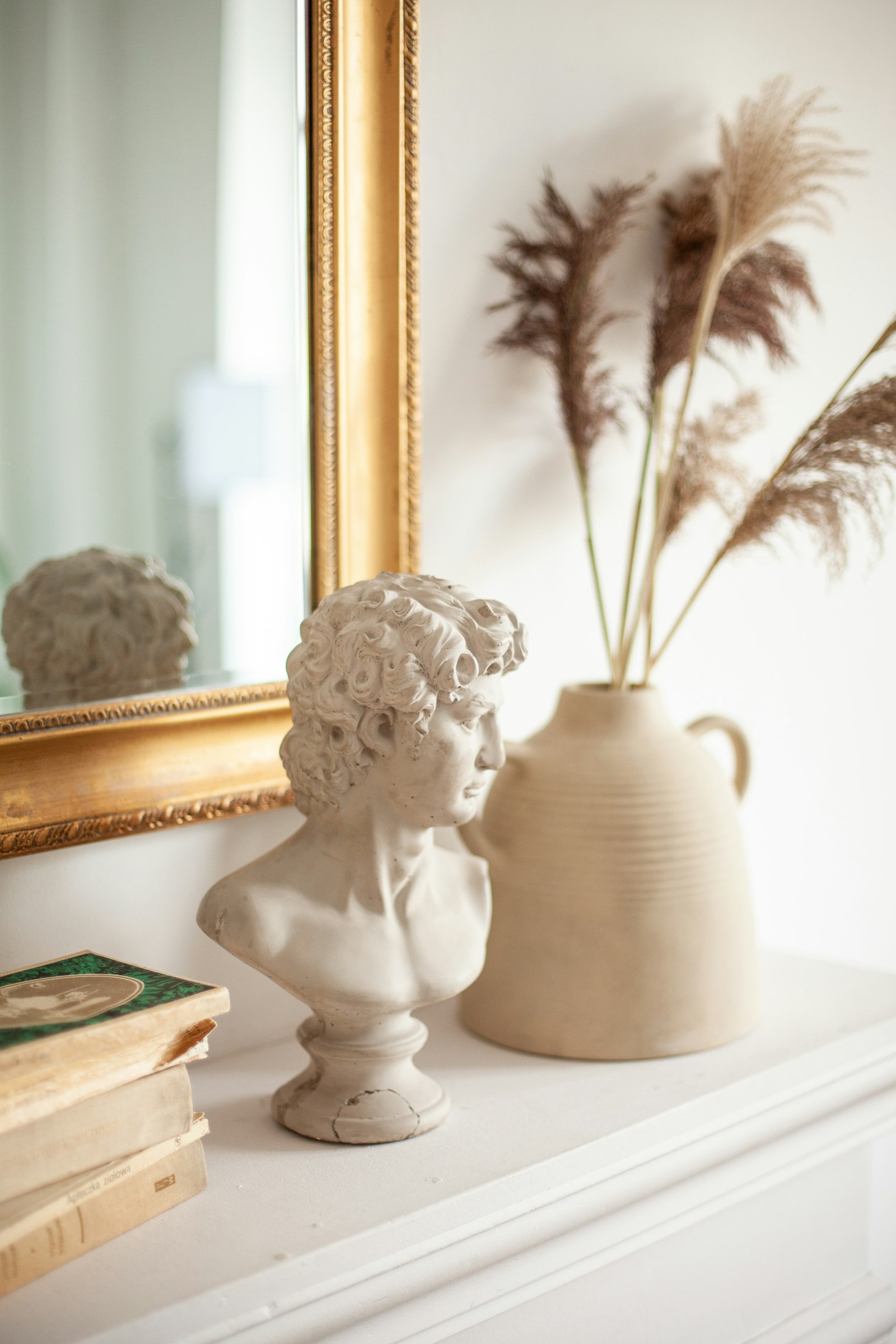
A classical bust is one of those pieces that makes a room feel collected rather than bought all at once. It brings a sense of history, a strong silhouette and a quiet bit of drama. Still, a sculpted head can look awkward if it is perched in the wrong spot or lost among clutter. This guide to decorating with classical busts covers where to place one, how to scale it, what to pair it with and how to keep it looking its best.
Decorating With Classical Busts: Why They Work Anywhere
A bust is essentially a portrait in three dimensions. Unlike a framed print, it reads from several angles, so it adds depth to a shelf or tabletop that flat objects cannot. A matte white or plaster finish also works as a neutral, which means it sits comfortably in a traditional paneled room and in a pared-back modern space alike. In a classic interior it feels at home. In a minimal one it becomes a deliberate point of contrast.
The key is to treat the bust as a focal point. It should have a little breathing room and a clear reason to be where it is.
The Best Places to Display a Bust
On a Mantel
The mantel is a natural stage for sculpture because it already draws the eye. Place the bust slightly off center and balance it on the other side with something of similar visual weight, such as a pair of candlesticks or a stack of books topped with a small vessel. A mirror or artwork leaning behind gives the bust a backdrop and stops it from floating. If you are building the arrangement from scratch, our guide on how to style a mantel walks through layering and balance step by step.
On a Console Table or Sideboard
An entry console is a great spot because it is the first thing guests see. Set the bust toward one end, add a lamp or tall vase at the other, and fill the middle with something low like a bowl or a tray. Hanging a mirror above the console doubles the impact, since the reflection shows the back of the sculpture too.
On Bookshelves
A bust breaks up long rows of spines beautifully. Give it its own section of shelf rather than squeezing it between books, and choose a shelf near eye level so the face is visible. One bust per bookcase is usually enough. More than that and the shelves start to feel like a museum storeroom.
On a Pedestal or Plinth
For a more formal look, a column or plinth lets a bust stand on its own in a corner, at the end of a hallway or beside a window. This works best with a larger piece and in rooms with enough floor space that the pedestal does not become an obstacle.
Getting the Scale Right
Scale is where most bust displays succeed or fail. A few simple guidelines help:
- Match the surface. A small bust on a long sideboard looks lost. A large one on a narrow shelf looks precarious. Aim for the bust to take up a meaningful share of the surface without crowding its edges.
- Consider the wall above. If there is a large mirror or painting behind, choose a bust tall enough to overlap the bottom edge of the frame slightly. This ties the two pieces together.
- Think about viewing height. Busts are meant to be looked at face to face or slightly from below. Very low placements, such as a coffee table, can work but tend to suit smaller pieces.
- Use risers when needed. A stack of hardcover books or a small block of stone can lift a bust that feels too short for its spot.
What to Pair With a Classical Bust
Sculpture looks richest when it is surrounded by a mix of textures and heights. Some pairings that rarely miss:
- Natural stone. Alabaster, marble and travertine echo the material story of classical sculpture. An alabaster ovoid vase beside a plaster bust creates a soft, tonal pairing with two different finishes.
- Warm metals. Brass and gilt bring warmth to a pale bust. Brass taper candlesticks add height and a gentle glow in the evening.
- A mirror behind. A gilded baroque frame leans into the classical mood, while a simple thin frame keeps things modern.
- Greenery. A branch of olive, eucalyptus or simple foliage in a vessel softens the hard lines of sculpture and adds life.
- Books. Stacked art or architecture books make a natural base and add color without fuss.
Try to keep the palette restrained around the bust. Creams, warm whites, stone tones and metallic accents let the form of the face stand out. Bright, busy patterns right behind it tend to compete.
Classical Busts in Modern Rooms
Some of the most striking uses of a bust happen in contemporary spaces. The contrast between an ancient form and clean modern lines feels intentional and a little witty. To pull this off, keep everything else simple. Place the bust on a plain shelf or a sleek console, skip the ornate extras, and let one or two modern pieces sit nearby, such as an abstract print or a sculptural ceramic. A matte finish usually reads better than a glossy one in this setting.
Lighting matters here too. A bust lit from the side by a lamp or window shows off the shadows in the carving, which is where all the character lives. Flat overhead light tends to wash out detail.
Common Mistakes to Avoid
- Facing it at the wall. Angle the bust toward the room or the main seating area, not toward a corner.
- Crowding it. Too many small objects around a bust dilute its presence. Edit until it clearly leads.
- Placing it where it can be knocked. Keep busts away from the edges of busy surfaces, door swings and spots where children or pets play.
- Too many in one room. One strong piece, or a deliberate pair flanking a mantel or doorway, is more effective than several scattered around.
Caring for a Plaster Bust
Plaster is porous and more delicate than stone, so gentle care keeps it looking fresh. Dust regularly with a soft, dry brush, such as a clean makeup or paint brush, working into the curls and folds. Avoid water and household sprays, which can stain or soften the surface. Keep plaster pieces out of damp rooms like bathrooms, and handle them by the base rather than the head or nose. If a piece needs more than light dusting, it is worth asking a professional conservator before trying anything yourself.
Find Your Statement Piece
If you are ready to add a little classical character to your home, our Classical Plaster Bust is a good place to start. You can also browse the full decor collection for vases, brass pieces and mirrors that pair naturally with sculpture.