Journal
How to Choose a Vase Size for Every Spot in Your Home
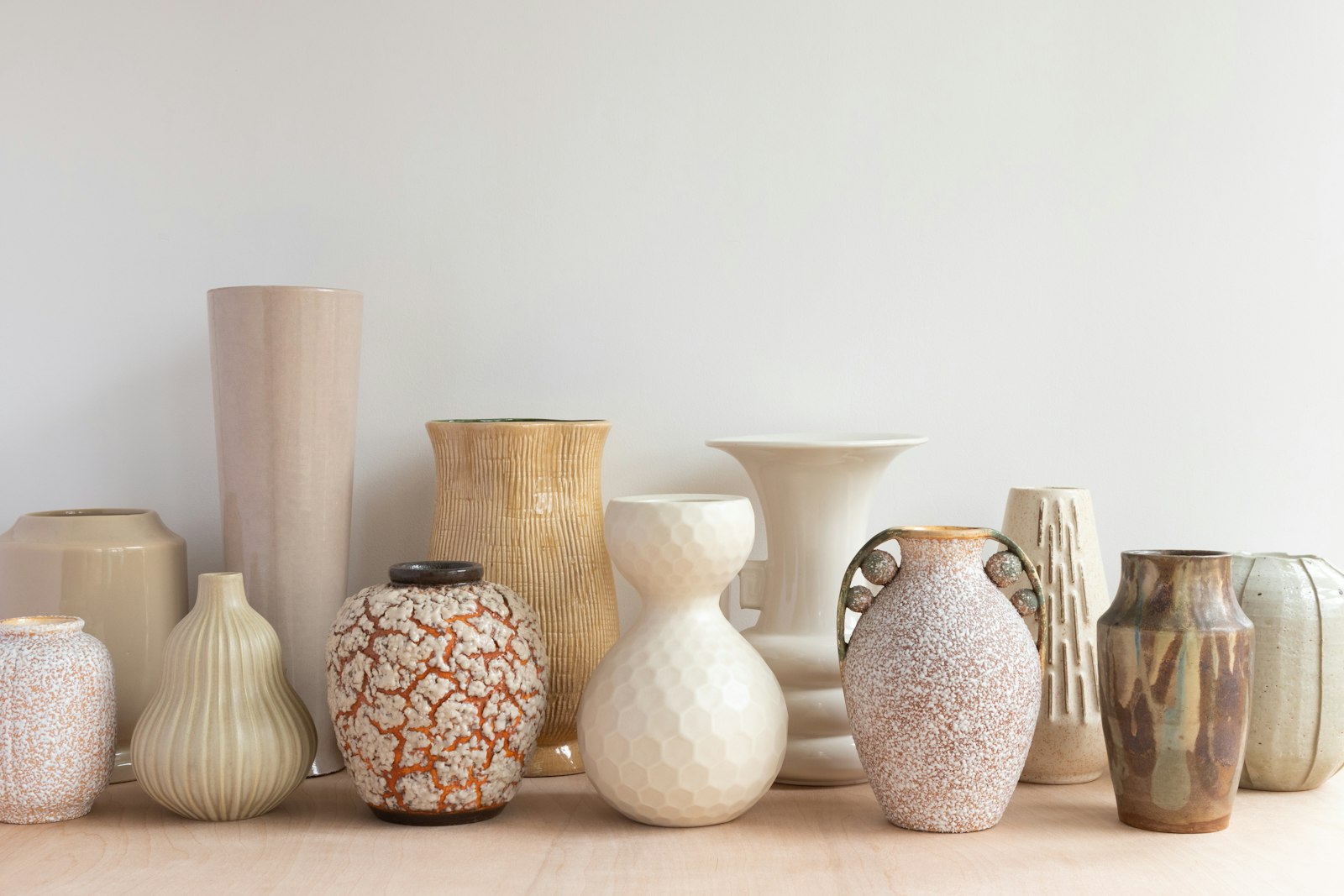
A beautiful vase in the wrong size can look oddly lost on a long table or awkwardly crowded on a narrow shelf. If you have ever wondered how to choose a vase size, the good news is that there are a few simple rules of proportion that work almost everywhere. Once you know them, picking the right piece for a console, a dining table or a mantel becomes much easier.
This guide covers how to size a vase to the surface it sits on, to the stems you put in it, and to the other objects around it, plus what to do when a vase will stay empty.
How to Choose a Vase Size: Start With the Surface
Before you think about flowers, look at where the vase will live. The surface and the space above it set the limits.
- Measure the depth. A vase should sit comfortably on the surface with a little breathing room on every side. If its base is close to the full depth of a shelf or console, it will feel precarious and is easy to knock.
- Check the clearance above. On a shelf, leave a gap between the top of the vase (or its stems) and the shelf above, so it does not look jammed in.
- Consider the length. A long sideboard or console can carry a taller or wider piece, or a group. A small side table usually wants something modest.
A useful habit is to cut a rough paper silhouette or stack a few books to the height you are considering. Step back to the doorway and look. It takes a minute and saves a lot of guesswork.
Match the Vase to the Stems
Florists often work to a simple guideline: the arrangement should rise roughly one and a half to two times the height of the vase. Shorter than that and the flowers look swallowed. Much taller and the arrangement can look top-heavy or tip over.
- Tall, slender stems such as branches, eucalyptus or long grasses suit tall vases with a narrow neck, which hold them upright without much effort.
- Full, round blooms such as peonies, hydrangeas or garden roses look best in a medium vase with a wider mouth, so the heads can open out and rest on the rim.
- Short stems and single flowers belong in bud vases or small bowls. A few short stems in a big vase will always look sparse.
Pay attention to the opening too. A wide mouth needs a lot of material to look full, while a narrow neck lets just three or four stems make a strong shape.
Vase Sizes for Common Spots in the Home
Dining table
The key here is conversation. People seated at the table should be able to see each other, so keep the centerpiece low, below seated eye level. If you love height, choose something slim and tall enough that guests look underneath the stems rather than through them. Low, wide bowls and a row of small vessels down the middle of a long table both work well.
Console or entry table
Consoles are made for height. A tall vase at one end, balanced by a lamp or a stack of books at the other, gives an entry a clear focal point. If there is a mirror or artwork above, let the vase overlap its lower edge slightly so the pieces read as one composition. Our guide on how to style a console table goes into more detail on building that arrangement.
Coffee table
Keep it low and stable. A coffee table is used for cups, books and feet, and it sits right in your line of sight when you are watching a fire or talking across the room. A short, weighty vase or a bowl is easier to live with than a tall one.
Mantel
A mantel can take taller pieces because it is above eye level and viewed from across the room. Vases that look large on a table often look just right up there. Vary the heights so the line across the shelf rises and falls rather than staying flat. For more ideas, see how to style a mantel.
Floor
Floor vases need real presence to hold their own beside furniture. They work well in a corner, beside a fireplace or at the foot of a staircase, usually filled with tall branches or dried grasses. If a floor vase looks like it could be mistaken for a forgotten object, it is probably too small.
Grouping Vases of Different Sizes
When one vase looks too small on its own, a group often solves the problem. A few tips make groupings feel intentional:
- Use odd numbers. Groups of three or five tend to look more relaxed than pairs.
- Vary the heights clearly. Small differences look like a mistake. Make the steps between tall, medium and short obvious.
- Keep one thing consistent. A shared colour, glaze or material ties different shapes together. A set like our Sculpted Clay Vessel Trio is already graduated in height, which takes the guesswork out.
- Overlap slightly. Place pieces so they partly sit in front of one another rather than in a straight row. It gives the group depth.
Choosing a Vase You Will Leave Empty
Many of the best decorative vases are never filled at all. An empty vase is judged as a sculpture, so shape and finish matter more than capacity. A clean, simple form such as the Alabaster Ovoid Vase holds attention on its own, and can take a few dried stems when you want a change.
For an empty piece, go a little larger than you would for flowers. Without stems adding height, a small vase can disappear. Pair it with objects of contrasting shape, such as a low bowl, a stack of books or a pair of candlesticks, so it has something to play against.
A Quick Checklist Before You Buy
- Measure the surface depth and the clearance above it.
- Decide whether it will hold tall stems, full blooms, a few short flowers, or nothing at all.
- Check whether it needs to be watertight. Some decorative vessels are not, which is fine for dried stems but not for fresh flowers.
- Think about what sits nearby, and whether the vase will stand alone or join a group.
- Mock up the height with books or paper and look from across the room.
Proportion is less about strict numbers and more about balance. Trust your eye, step back often, and move things around until the arrangement feels settled.
If you are looking for a piece to start with, browse our decor collection for vases, vessels and the objects that sit happily beside them.