Journal
How to Choose a Kitchen Island Chandelier
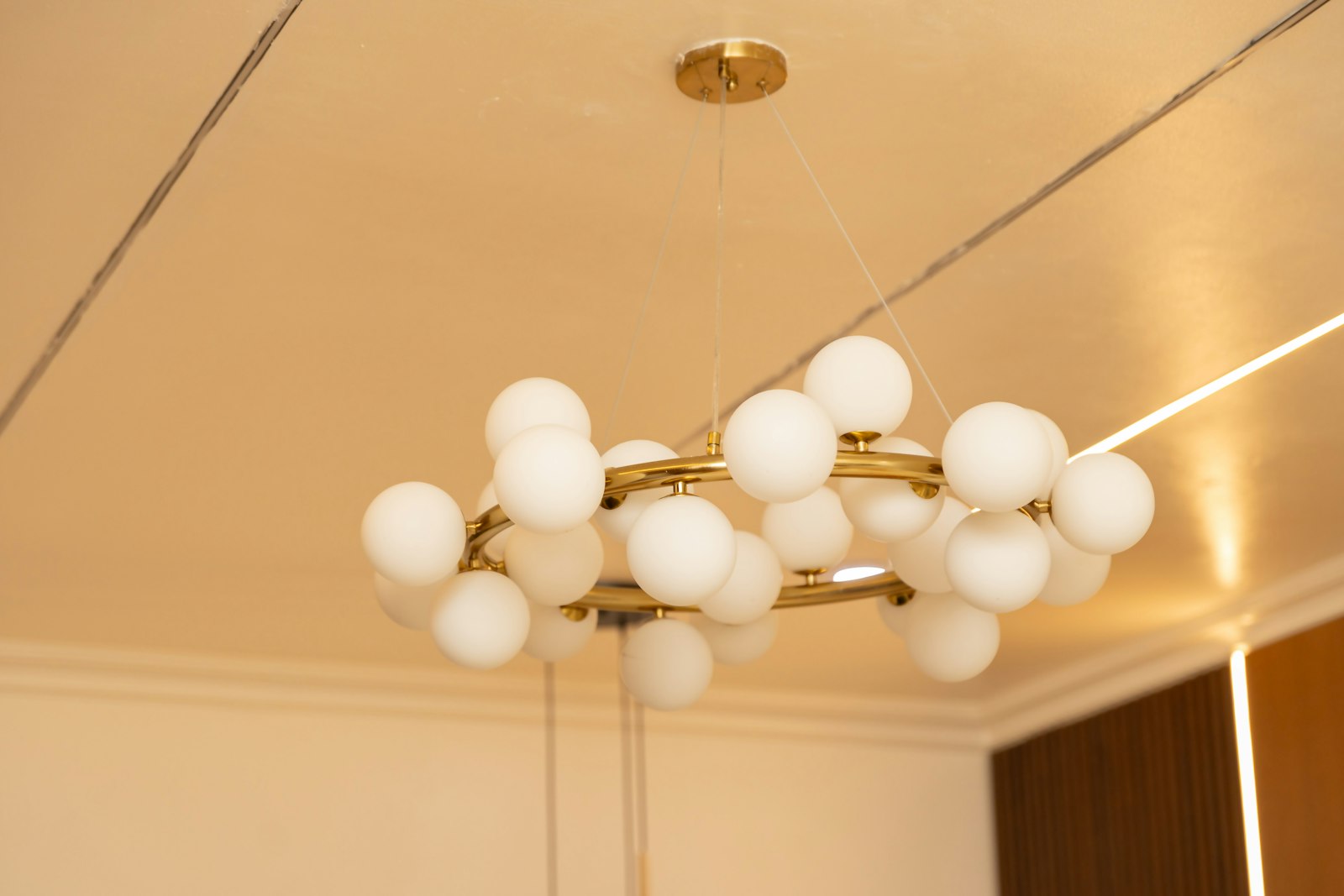
A kitchen island is often the busiest surface in the house. It is where coffee gets poured, homework gets done and guests gather before dinner, so the light above it has two jobs: it has to be useful, and it sets the tone for the whole room. Choosing a kitchen island chandelier comes down to a handful of practical decisions about size, height, shape and finish. Get those right and almost any style you love will work.
One Chandelier or a Row of Pendants?
Before looking at styles, decide how many fixtures the island needs. The answer usually depends on its length.
- Short or square islands often look best with a single chandelier centered over the top. One generous fixture reads as a deliberate focal point.
- Long islands usually suit two matching fixtures, or a linear chandelier that stretches along the length. A single round fixture over a long island can leave the ends in shadow.
- Very long islands can take three smaller pendants. Odd numbers tend to feel balanced, and spacing them evenly matters more than the exact count.
If you use more than one fixture, leave roughly 24 to 30 inches between them so each has room to breathe, and stop the group about 6 inches or more short of each end of the island so the light stays over the counter rather than over the floor.
How to Size a Kitchen Island Chandelier
The most common mistake is a fixture that is too small, which ends up looking like an afterthought. A useful starting point is to keep the total width of your lighting roughly 12 inches narrower than the island’s length, then adjust by eye. For a single round chandelier, a diameter of about one half to two thirds the width of the island is a comfortable range for most kitchens.
Visual weight matters as much as the measurement. An open frame or a cluster of glass globes can be larger without crowding the room, while a dense crystal fixture of the same diameter will feel heavier. If you are unsure, cut a circle of cardboard to the diameter you are considering and hold it up over the island. It is a simple test that saves a lot of second guessing. Our guide on how to choose the right chandelier size walks through the room-size formulas in more detail.
How High to Hang It
The general guideline is to leave about 30 to 36 inches between the countertop and the bottom of the fixture. That keeps the light close enough to be useful for chopping and reading recipes, while staying above most people’s sight line when they are seated or standing across from each other.
- With higher ceilings, stay toward 36 inches or a little more, and choose a taller fixture or a longer chain so the light does not float too far above the counter.
- With standard height ceilings, a flatter or more compact chandelier helps keep the room feeling open.
- Check sight lines from the sink, the stove and the main seating area before the electrician locks in the height.
The same thinking applies over a dining table, which we cover in how high to hang a chandelier over a dining table.
Choosing a Style That Suits the Kitchen
Kitchens tend to have a lot of hard, straight lines: cabinetry, countertops, appliances. A chandelier is one of the few places you can add curves, sparkle or softness, so think about what the room is missing.
Globe and open frame designs
Glass globes on a brass or metal frame give an even, diffused light and suit modern, transitional and mid-century kitchens. They are also easy to see through, which keeps the space feeling airy. The Orbit Brass Globe Chandelier is a good example of this look.
Crystal chandeliers
Crystal over an island can be lovely, especially in a kitchen that opens onto a living or dining area. It throws small points of light across the room and makes a simple space feel dressed up. Pairing crystal with a warm metal, as on the Versailles Brass and Crystal Chandelier, keeps it from feeling too formal.
Matching finishes
You do not need to match the chandelier to your cabinet hardware exactly, but it helps to repeat the finish at least once elsewhere in the room, perhaps in a faucet, a bowl on the counter or a pair of candlesticks. Repetition is what makes a mix of metals look intentional.
Practical Points for a Working Kitchen
- Install a dimmer. Bright light for cooking and soft light for evenings make the same fixture far more versatile.
- Layer your lighting. A chandelier is rarely enough on its own. Recessed or under-cabinet lights handle the work surfaces around the perimeter, so the island fixture can focus on mood and the island itself.
- Pick a bulb color temperature and stick to it. Warm white bulbs flatter wood, stone and skin tones. Mixing warm and cool bulbs in the same room tends to look patchy.
- Think about cleaning. Kitchens produce steam and cooking residue, so a fixture near the stove will need wiping more often. Open frames and smooth glass are quicker to clean than intricate crystal, though crystal is perfectly manageable with a regular routine.
- Confirm the ceiling support. Heavier chandeliers may need a properly rated junction box or extra bracing. A licensed electrician can check this before installation.
A Quick Checklist Before You Buy
- Measure the length and width of the island.
- Decide on one fixture, two, or three based on its length.
- Note your ceiling height and work out the drop needed for a 30 to 36 inch clearance.
- Choose a finish that repeats at least one other metal or tone in the room.
- Plan for a dimmer and supporting task lighting.
With those answers in hand, the choice becomes much easier and far more personal. If you are starting to look, browse our chandelier collection for crystal, brass and globe designs that can bring warmth and character to the heart of your kitchen.