Journal
Cowhide Rug Size Guide: Choosing the Right Size for Every Room
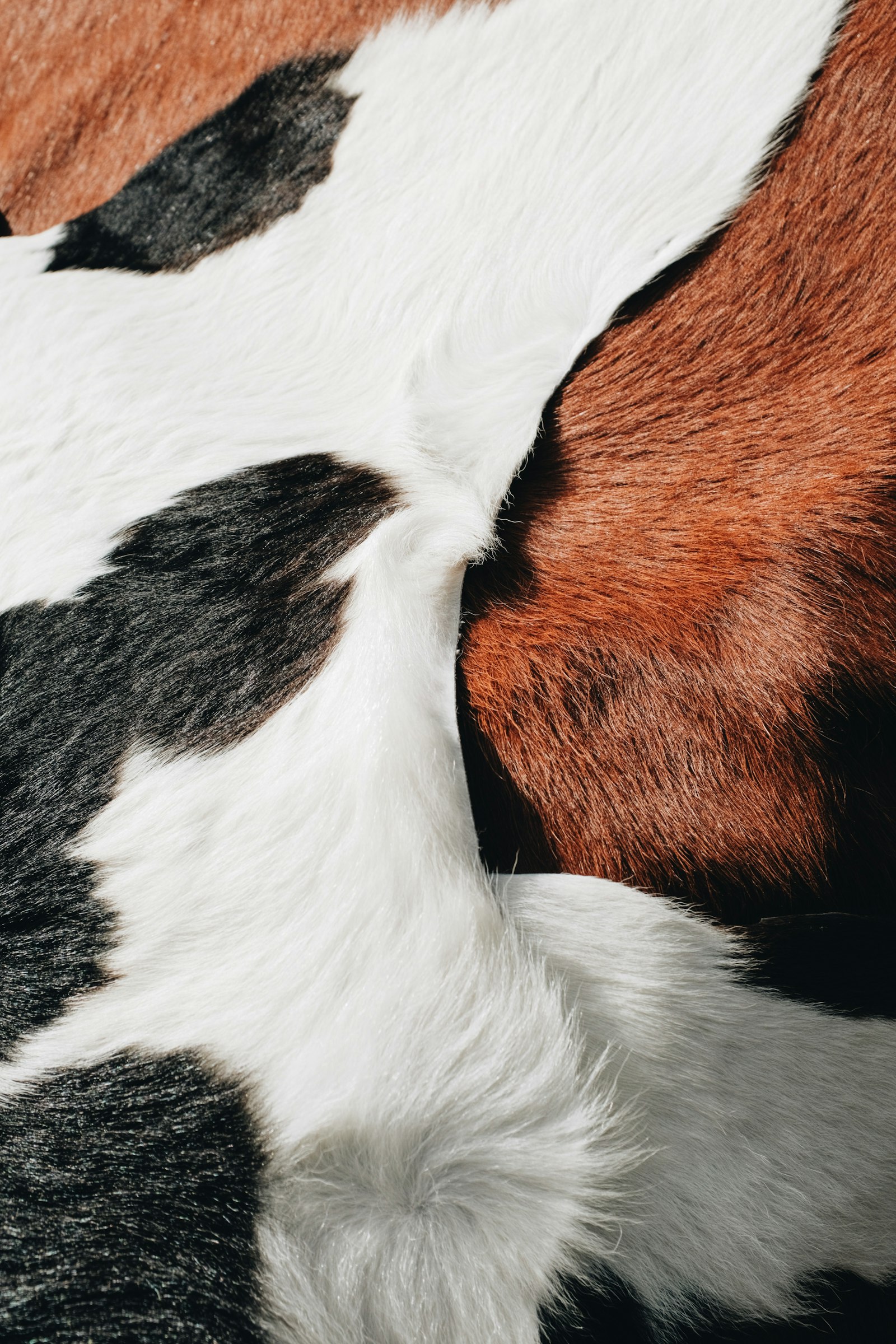
Choosing the right size is the single biggest factor in whether a cowhide rug looks intentional or lost. This cowhide rug size guide walks through how hides are measured, which size suits each room, and a simple way to test the fit before you buy.
How cowhide rug sizes are measured
A cowhide is a single natural pelt, so it has no neat rectangle to measure. Sizes are given as the approximate length from neck to tail and the width across the widest point, usually the shoulders. Because the outline is irregular, the usable area is smaller than a rectangular rug with the same dimensions: the legs and edges narrow in, and the shape curves.
Our cowhides come in two sizes:
- Large: about 6 x 7 ft
- Extra Large: about 7 x 8 ft
Every hide varies a little, so treat these as guides rather than exact measurements.
Cowhide rug size guide by room
Living room
In a living room, the cowhide usually sits in front of the sofa or beneath the coffee table. For a standard three-seat sofa, an Extra Large hide gives the most generous look: place it so the front legs of the sofa and chairs rest just on its edge, which ties the seating together. In a smaller room or a reading corner with one or two chairs, a Large hide is often plenty.
A useful rule is to leave some bare floor visible around the rug on all sides. A cowhide that runs right up to the walls loses its distinctive shape.
Bedroom
There are two classic placements. The first is at the foot of the bed, running across its width, where a Large hide works well with a queen bed and an Extra Large with a king. The second is beside the bed, angled slightly, so it is the first thing your feet touch in the morning. For this side placement, a Large hide is usually the better fit.
Dining room
Dining rugs need to be big enough that chairs stay on the rug when they are pulled out, which normally means extending about 24 inches beyond the table on every side. Because of its irregular edges, a cowhide rarely achieves this under a full dining table. It works best under a small round table or a breakfast nook, where an Extra Large hide can hold the table and chairs comfortably.
Office, entry and hallway
Under a desk, choose a size that lets the chair roll without catching an edge; an Extra Large hide is safer for a rolling chair. In an entry or wide hallway, a Large hide laid lengthways makes a strong first impression, provided doors can open freely over it.
Test the size before you buy
The easiest way to check a size is to mark it on the floor. Use painter’s tape to outline a rough rectangle at the listed length and width, then trim the corners inward to imitate the natural shape. Live with it for a day, walk around it and look at it from the doorway. You will know quickly whether the space wants the larger or the smaller hide.
Placement tips that make any size look better
- Angle it. Turning a cowhide 20 to 30 degrees off square softens a room and shows off its natural outline.
- Layer it. Laying a cowhide over a larger neutral rug, such as jute or sisal, lets you use a smaller hide in a big room while still anchoring the furniture.
- Mind the pattern. Bold markings, like a black and white cowhide, read larger and more graphic than a speckled salt and pepper hide, which can feel quieter in the same size.
- Keep it flat. On smooth floors, a thin rug pad stops sliding and helps the edges lie flat.
Which size should you choose?
If you are between sizes, the larger hide is usually the safer choice in living rooms and under desks, while the smaller one suits bedsides, entries and compact rooms. Whichever you pick, look after it with a regular shake and a gentle vacuum; our guide on how to care for a cowhide rug covers the details.
Browse our cowhide rugs, from the classic brown and white to tricolor and brindle, each available in Large or Extra Large.