Journal
How High to Hang a Chandelier Over a Dining Table
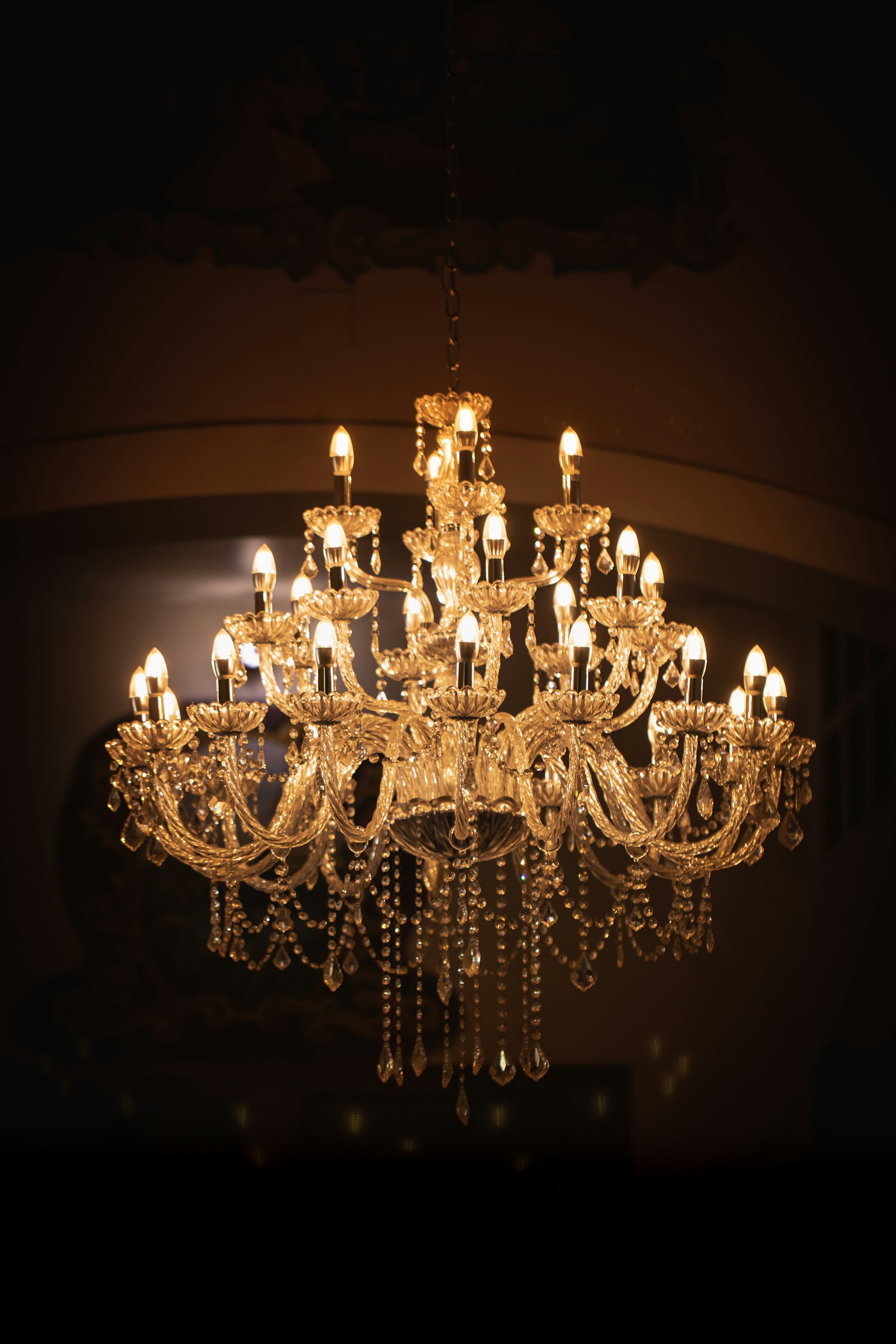
A chandelier over the dining table is the one light in the house people sit directly beneath, so getting the height right matters more than almost anywhere else. If you have been wondering how high to hang a chandelier over a dining table, the good news is that there is a simple starting rule, and a few easy adjustments for taller ceilings, bigger tables and the way your family actually uses the room.
How High to Hang a Chandelier Over a Dining Table: The Basic Rule
The widely used guideline is to leave about 30 to 36 inches between the tabletop and the lowest point of the chandelier, assuming a standard 8-foot ceiling. Measure from the table surface, not the floor, and measure to the very bottom of the fixture, including any finial or hanging crystal.
That range does two jobs. It keeps the light low enough to feel intimate and to light faces and food rather than the ceiling, and it keeps the fixture high enough that nobody’s view across the table is blocked. Seated diners should be able to see each other comfortably beneath or past the light.
Adjusting for taller ceilings
For every foot of ceiling height above 8 feet, a common adjustment is to raise the fixture about 3 inches. So a 9-foot ceiling suggests roughly 33 to 39 inches above the table, and a 10-foot ceiling roughly 36 to 42 inches. This keeps the chandelier in proportion with the room so it does not look as if it has dropped too far, while still relating clearly to the table below.
In double-height dining spaces, the light will usually hang on a longer chain or rod, and a taller fixture often looks better than a wide, shallow one because it fills more of the vertical space. Keep the bottom within the same general zone above the table and let the chain take up the rest.
If your ceiling is lower than 8 feet
With a lower ceiling, you can still follow the table-height rule, because the table is what keeps people from walking into the fixture. The challenge is that a tall chandelier may simply not fit in the space between ceiling and the 30-inch mark. Look for flush or semi-flush styles or shallower designs. We cover this in more detail in our guide to chandeliers for low ceilings.
How Wide Should a Dining Room Chandelier Be?
Height and width work together. A fixture that is the right height but the wrong size will still look off. Two simple checks help:
- Relative to the table: aim for a chandelier roughly one half to two thirds the width of the table. A 42-inch-wide table pairs comfortably with a fixture about 21 to 28 inches across.
- Clearance at the edges: leave at least 6 inches between the edge of the fixture and the edge of the table on each side, so nobody standing up hits their head on the arms.
If you are choosing a new light from scratch, our chandelier size guide walks through the room-based formulas too.
Long, Round and Oval Tables
Table shape changes the decision more than people expect.
- Round and square tables suit a single round chandelier hung over the exact centre. This is the easiest combination to get right.
- Oval tables work well with either a round fixture or a slightly elongated one that echoes the table shape.
- Long rectangular tables can look under-lit with one round fixture in the middle and dark at the ends. Consider two matching chandeliers spaced evenly along the length, or a linear fixture. With two lights, divide the table length into thirds and hang one roughly over each dividing line, keeping both at the same height.
Centre on the Table, Not the Room
A frequent mistake is hanging the light from wherever the electrical box happens to be. If your table sits off-centre in the room, as it often does in open-plan spaces or rooms with a sideboard along one wall, the chandelier should follow the table. An electrician can move the junction box, or you can use a swag hook to reposition the fixture, which suits more traditional styles. Decide on the table’s final position first, then set the light.
Practical Tips Before You Hang It
- Test the height first. Before the final install, have someone hold the fixture, or hang a cardboard cut-out of the same size, at your chosen height. Sit at the table and check sightlines from several chairs.
- Choose an adjustable drop. Chandeliers hung on chain or an adjustable rod can be shortened or lengthened later, which is useful if you change tables.
- Add a dimmer. A dining chandelier is used for quick breakfasts and long dinners alike. A compatible dimmer lets one light suit both.
- Pick warm bulbs. Warm white bulbs, around 2700K, flatter skin tones and food and suit most dining rooms.
- Use a professional for hardwiring. Hardwired chandeliers should be installed by a qualified electrician, who can also confirm the ceiling box is rated for the fixture’s weight.
Matching the Style to the Table
Once the numbers are settled, think about how much visual weight the light should carry. Crystal fixtures scatter light across the ceiling and walls, which makes a dining room feel bright and celebratory; a tiered design like the Aurelia Crystal Cascade Chandelier is built for exactly this spot. A brass candle-arm chandelier such as the Versailles Brass and Crystal Chandelier brings a warmer, more traditional mood to a wooden table. For a simpler, modern table, opal glass globes on slim arms, like the Orbit Brass Globe Chandelier, give soft, even light without competing with the room.
A shallow fixture like a globe chandelier is also forgiving on height, since there is less of it hanging between you and the people across the table. Taller tiered and candle-arm designs reward a little more ceiling.
A Quick Recap
- Hang the bottom of the chandelier 30 to 36 inches above the tabletop with an 8-foot ceiling.
- Raise it about 3 inches for each extra foot of ceiling height.
- Keep the width to roughly half to two thirds of the table, with at least 6 inches clear on each side.
- Centre the light over the table, not the room, and test the height before the final install.
If you are looking for the light to sit above your own table, take a look through our chandelier collection. Each listing includes the fixture’s width and height, so you can check it against your table and ceiling before you decide.