Journal
Chandeliers for Low Ceilings: How to Choose and Hang One
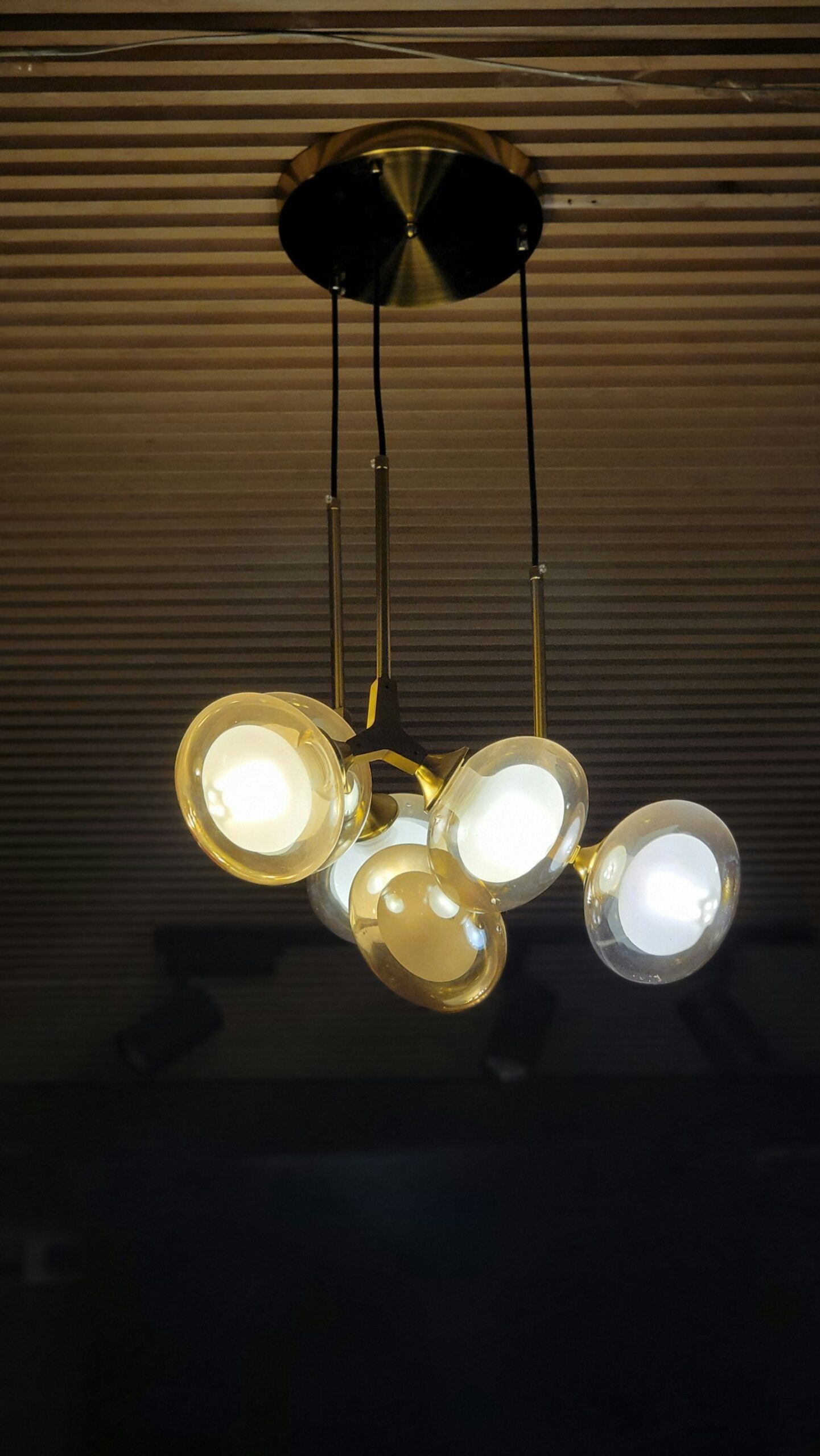
A low ceiling does not rule out a chandelier. It simply changes what kind of chandelier works and where it should hang. Choosing chandeliers for low ceilings comes down to three things: how much headroom you have, where people will walk, and how the fixture spreads its light. Get those right and an eight foot room can carry a beautiful piece of lighting without anyone ducking.
Start With the Headroom You Actually Have
Before you look at styles, measure. Most rooms described as having low ceilings are somewhere between seven and a half and eight and a half feet. The figure that matters is not the ceiling height itself but the clearance left underneath the fixture once it is installed.
The common guideline for any area people walk through is at least seven feet from the floor to the bottom of the fixture. On an eight foot ceiling, that leaves only about twelve inches for the chandelier, its canopy and any chain or rod. That is why a chandelier in the middle of a low living room or hallway is rarely a good idea, while the same fixture over a table can work very well.
- Walkways and open floor: keep seven feet of clearance, which on a low ceiling usually means a very shallow fixture or a different kind of light altogether.
- Over a dining table: nobody walks under the table, so the usual guide is 30 to 36 inches from tabletop to the bottom of the fixture.
- Over a kitchen island or bed: the same logic applies. If furniture keeps people from standing directly beneath, you can hang lower.
Where Chandeliers for Low Ceilings Work Best
The dining table is the natural home for a chandelier in a low room. Here is the arithmetic for a typical eight foot ceiling. A standard dining table is about 30 inches high. Hang the chandelier so its bottom sits 30 inches above the top, and the bottom of the fixture is around 60 inches from the floor. That leaves roughly 36 inches between the ceiling and the bottom of the light, which is room for a fixture of 24 to 30 inches in height plus a short length of chain.
In other words, a fairly substantial chandelier can still work in a low dining room, as long as you shorten the drop. Our Versailles Brass and Crystal Chandelier is about 30 inches high, so on an eight foot ceiling it would need very little chain to sit at a comfortable height over a table. Always confirm with your own measurements, since table heights and ceiling heights vary.
Bedrooms are another good candidate, with the light centred over the bed rather than the walkway. Entry halls and living rooms with low ceilings are harder, and often look better with a shallow fixture or a pair of wall lights instead.
Choose a Shape That Spreads Out, Not Down
For a low room, the most useful thing to look for is a fixture that is wider than it is tall. A low, broad silhouette fills the space visually without eating into headroom. Tall, tiered or cascading designs are better kept for rooms with nine foot ceilings or more, or for double-height entries.
The Orbit Brass Globe Chandelier is a good example of this shape. It is about 30 inches wide but only about 18 inches high, with opal glass globes on slender arms that reach outward rather than downward, and an adjustable rod so you can set the drop to suit the room.
A few features help a chandelier sit comfortably under a low ceiling:
- Arms that branch horizontally. Sputnik and globe styles, and candle-arm designs with a single tier, keep their height compact.
- Open frames. Slim metal arms and plenty of space between lights let you see the ceiling through the fixture, so it feels lighter.
- Adjustable chain or rod. This lets you shorten the drop on site rather than guessing in advance.
- A modest canopy. The plate at the ceiling adds a little depth, so check it is included in the overall measurements.
Mind the Glare
In a low room, the bulbs sit closer to eye level than they would in a tall one, so glare is more noticeable. Frosted or opal glass shades soften the light and hide the bulb. If you prefer exposed candle bulbs, choose a lower brightness and a warm colour temperature, roughly 2700K, which reads as gentle and flattering in the evening.
A dimmer is one of the most useful upgrades you can make. It lets one fixture work for bright weeknight tasks and a softer dinner, and it takes the edge off any glare. Check that your bulbs are labelled dimmable and that the dimmer is compatible with them.
Size It to the Room, Then Check the Height
The usual rules for diameter still apply in a low room. Add the room’s length and width in feet, and use that number in inches as a starting point for the chandelier’s width. Over a table, aim for between half and two thirds of the table’s width. Our guide on how to choose the right chandelier size walks through these rules in more detail.
Height is where low ceilings call for extra care. A common guideline is 2.5 to 3 inches of fixture height per foot of ceiling height, which puts an eight foot ceiling at roughly 20 to 24 inches. Over a table you can sometimes go a little taller, as the dining room example above shows. In a walkway, go much shallower.
A Quick Checklist Before You Buy
- Measure floor to ceiling in the exact spot where the fixture will hang.
- Decide whether people will walk underneath. If so, keep seven feet of clearance.
- Over a table, plan for 30 to 36 inches between tabletop and fixture.
- Subtract that from your ceiling height to find the most fixture height, chain included, that will fit.
- Favour wide, open, single-tier shapes with adjustable drops.
- Plan for a dimmer and soft, warm bulbs.
Chandeliers are hardwired, so have a qualified electrician install yours, and make sure the ceiling box is rated for its weight. A professional can also cut the chain or rod to the exact length once the fixture is in place.
If you are lighting a lower room, take your measurements with you as you browse our chandelier collection. Each piece lists its width, height, number of lights and bulb type, so you can find one that fits your ceiling as well as your style.