Journal
Carrara vs Calacatta Marble: Which Is Right for Your Fireplace?
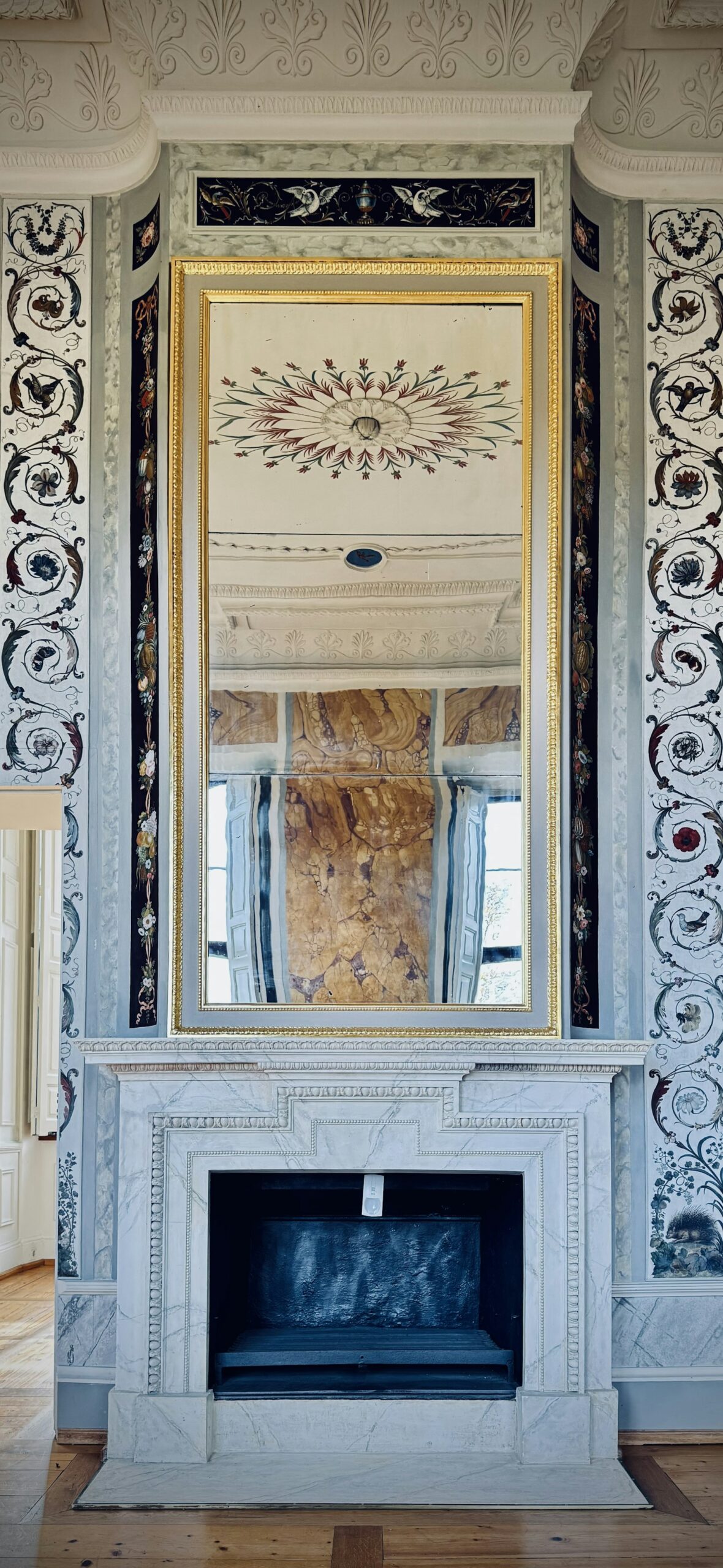
If you have started shopping for a white marble fireplace, you have almost certainly run into two names over and over: Carrara and Calacatta. They look similar in small photos, they come from the same part of Italy, and they are often described with the same words. Yet in a room they feel quite different. This guide to Carrara vs Calacatta marble for a fireplace walks through how to tell them apart, how each one behaves around a hearth, and which suits the room you are working with.
Where both marbles come from
Carrara and Calacatta are both quarried in the Apuan Alps above the town of Carrara in Tuscany, an area that has supplied white marble for centuries. Because they come from the same mountains, they share the same basic makeup. Both are calcite marbles, which means they are relatively soft, somewhat porous and sensitive to acids. The differences between them are mostly about appearance: the colour of the background stone, and the character of the veining that runs through it.
The names are trade names rather than strict scientific categories, so you will see some overlap between suppliers. One stone yard’s “Calacatta” may be another’s “premium Carrara.” That is why it pays to look at the actual slab, or a good photo of it, rather than relying on the label alone.
Carrara vs Calacatta marble fireplace: how to tell them apart
Background colour
Carrara usually has a soft white ground with a slight grey or blue-grey cast. Next to a bright white painted wall it can read as gently cool. Calacatta tends to have a brighter, cleaner white ground, so it looks crisper and more luminous in the same light.
Veining
This is the easiest way to tell them apart. Carrara veining is typically fine, soft and feathery, often in light to medium grey, and spread fairly evenly across the stone. From a few steps back it can look almost like a quiet texture. Calacatta veining is bolder and thicker, with more contrast against the white. The veins can be grey, charcoal or carry warm gold and taupe tones, and they often sweep across the slab in larger, more dramatic movements.
Availability and cost
Carrara is the more plentiful of the two, which is a large part of why it is so widely used. Calacatta is quarried in smaller quantities, and stone with strong, attractive veining is selected carefully, so it generally costs more. You may also see Statuario mentioned alongside both. It is close to Calacatta, with a very white ground and striking grey veining.
How each one looks on a fireplace
A fireplace surround is a relatively small piece of stone compared with a kitchen island or a bathroom wall, and that changes how the veining reads. With a soft, even marble like Carrara, the surround tends to look calm and consistent from every angle. It lets the shape of the mantel do the talking, which is why it works so well with classic profiles like a bolection moulding or a simple flat frame.
With Calacatta, a single bold vein can become the focal point of the whole wall. That can be beautiful, but it also means the way the slabs are cut and matched matters a great deal. On a surround made from several pieces, you want the veins on the legs and the header to relate to each other rather than stop and start awkwardly. If you choose Calacatta, ask to see how the pieces will be laid out before anything is cut.
Which suits your room?
A few simple questions will usually point you in the right direction.
- Is the fireplace the main event, or part of a backdrop? If you want the fireplace to be the single strongest feature in the room, Calacatta’s bold veining delivers that. If it shares the stage with art, a large mirror or a statement chandelier, Carrara keeps things balanced.
- What is the light like? In a north-facing or dimmer room, Carrara’s grey undertone can look cooler and a little flatter. Calacatta’s brighter ground holds up well in softer light. In a sunny room, both look lovely.
- Warm or cool palette? Carrara pairs naturally with cool greys, blues, crisp whites, nickel and chrome. Calacatta with gold-toned veining sits comfortably with warm whites, brass, walnut and cream upholstery.
- Period or modern? Both work in either. Carrara has a long history in traditional mantels and also looks fresh in a pared-back modern room. Calacatta often feels a touch more glamorous, which suits a formal room or a minimal space where you want one luxurious note.
And if you find that neither white marble feels right, it is worth looking at the other end of the spectrum. A black marble such as our Nero Marquina Marble Fireplace Surround gives a similar sense of veined natural stone, but with deep black ground and fine white lines that read as dramatic and graphic.
Honed or polished?
Both marbles can be finished either way. A polished finish is glossy and reflective, which makes the veining look deeper and the white look brighter. A honed finish is smooth and matte, which feels softer and more relaxed. On a fireplace, honed marble has a practical advantage: etching, the dull marks left when something acidic touches the stone, is much less noticeable on a matte surface than on a polished one. Polished still works well on a surround, which sees far less wear than a countertop.
Care is the same for both
Because Carrara and Calacatta are made of the same kind of stone, they need the same care. A few habits keep either one looking good for years:
- Use a pH-neutral stone cleaner or mild soap and water. Avoid vinegar, lemon, bleach and general bathroom sprays, which can etch the surface.
- Apply a penetrating stone sealer as the manufacturer recommends. Sealing slows down staining from soot, candle wax and drinks, though it does not stop acid etching.
- Wipe soot and ash promptly with a soft, damp cloth rather than scrubbing.
- Keep candles in holders or on trays so dripping wax and coloured dyes never sit directly on the mantel shelf.
For a step-by-step routine, including how to deal with soot stains, see our guide on how to clean a marble fireplace.
One safety note applies to every marble surround: the decorative stone frames the opening, but the firebox itself should be lined with materials rated for direct heat, and any installation should follow your local building codes and the guidance of a qualified installer.
The short version
Choose Carrara if you want a soft, timeless white with gentle grey veining that lets the shape of the mantel and the rest of the room shine. Choose Calacatta if you want a brighter white with bold veining that makes the fireplace the star. Either way, look at the real stone, think about your light and palette, and give it the same simple, gentle care.
If the quieter, classic look appeals, take a closer look at our Carrara Marble Fireplace Surround in a honed finish, or browse the full fireplace collection to compare it with our limestone, travertine and black marble pieces.