Journal
How to Tell If a Cowhide Rug Is Real: 7 Simple Checks
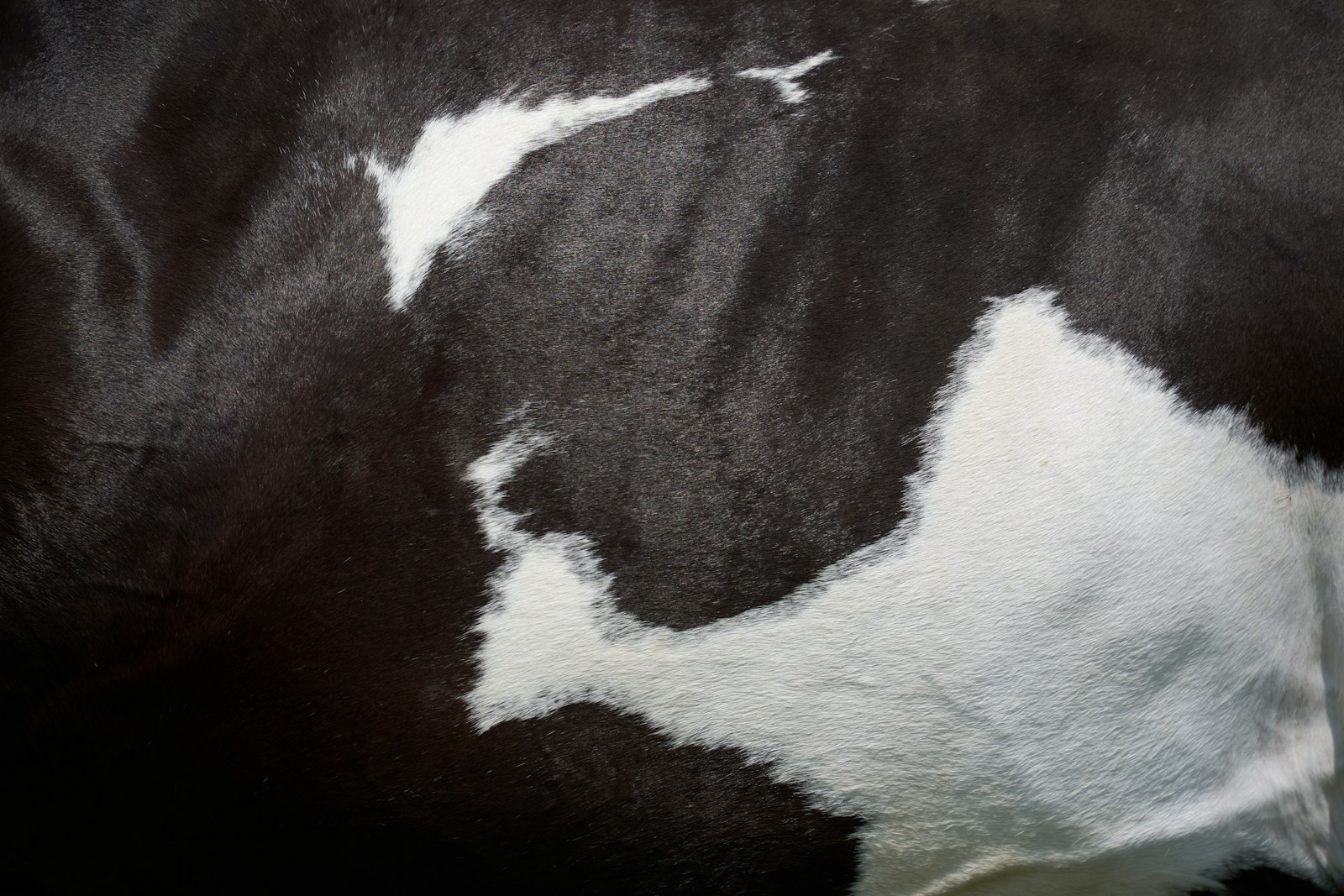
Faux cowhide has become very convincing, and from a product photo alone it can be hard to know what you are looking at. If you are wondering how to tell if a cowhide rug is real, the good news is that a genuine hide gives itself away in a handful of simple ways: the backing, the hair, the shape and the pattern. Here is what to check, whether you are shopping online, browsing a vintage market or looking at a rug you already own.
Real vs faux: what you are actually comparing
A real cowhide rug is a single tanned hide with the hair left on, often called hair-on-hide. It is leather on one side and natural hair on the other. A faux cowhide is usually a synthetic pile, such as polyester or acrylic, printed or woven with a cowhide pattern and fixed to a fabric backing. Some rugs sit in between: printed hides are real cowhide that has been dyed or stenciled to look like zebra, leopard or another pattern. They are still genuine leather, just not a natural coat.
How to tell if a cowhide rug is real: 7 checks
1. Turn it over and look at the back
This is the quickest and most reliable test. The underside of a real hide is leather: smooth or slightly suede-like, usually a pale cream or tan, with small natural marks, creases and variations in thickness. A faux rug shows a woven fabric, a mesh grid, a rubbery non-slip coating or a felt-like backing with a regular, manufactured texture.
2. Look at the edges
Real hides usually have raw, cut leather edges. You can see the layer of leather with the hair growing out of it. Faux rugs often have a bound, stitched or glued edge, and the backing material may show as a neat strip around the perimeter.
3. Run your hand over the hair
Natural cowhide hair is short, dense and lies flat in one direction, following the way it grew on the animal. Stroke it one way and it feels smooth; stroke it the other way and it feels slightly rougher. The length and sheen also change subtly across the hide, often a little longer near the spine and edges. Synthetic pile tends to feel the same everywhere, can be plusher or slicker than real hair, and often has no clear direction.
4. Study the shape
A genuine hide keeps the natural outline of the animal, with irregular legs, a neck and a tail end, and no two are quite alike. Faux cowhide rugs are often cut to a tidy, perfectly symmetrical silhouette, or are simply rectangular with a printed pattern.
5. Check the pattern for repeats
Every real cowhide has its own markings. Spots have soft, slightly feathered borders where dark and light hair meet, and the pattern does not mirror perfectly from one side to the other. On a faux rug, look for crisp printed edges, colors that sit on the surface rather than running through each hair, and spots that repeat. If a retailer shows several rugs with identical markings, they are not natural hides.
6. Notice the weight and feel
Real hides are supple but have some body. They drape and bend like a heavy leather jacket and lie fairly flat once they settle. Faux rugs can feel lighter and floppier, or stiff and plasticky, depending on the backing. A new real hide may also have a faint, natural leather smell.
7. The single-hair burn test (with care)
If you still are not sure and the rug is yours, you can pluck one or two loose hairs from the underside edge and hold them to a flame over a sink or a non-flammable dish. Natural hair singes, smells like burnt hair and crumbles to a fine ash. Synthetic fiber tends to melt, curl into a hard bead and smell like burning plastic. Only ever test a single strand, never the rug itself, and keep water nearby.
What about printed, dyed or metallic hides?
A rug that looks like a zebra, has an unusual color or carries a metallic or acid-washed finish can still be real cowhide. Apply the same backing and edge checks. If the underside is leather and the hair has a natural direction, it is a genuine hide that has been decorated. The color on printed hides usually sits only on the tips of the hair, so parting the hair gently will often reveal a lighter base.
Questions to ask before you buy online
When you cannot touch the rug, the listing has to do the work. A clear description should tell you:
- The material. Look for wording such as natural hair-on-hide or genuine cowhide, rather than vague terms like cowhide look, cowhide style or animal print.
- That every piece is unique. A seller of real hides will note that markings and shape vary from the photos.
- Approximate sizes. Natural hides are measured roughly, neck to tail and across the shoulders, not to the exact inch.
- Care instructions. Genuine hides should be shaken out, vacuumed in the direction of the hair and never machine washed. Faux rugs are sometimes listed as washable.
Why it matters
Faux rugs have their place, but they wear differently. A real hide has a natural, low-pile texture that resists crushing, tends to shed stains that are blotted quickly, and develops a soft, lived-in character over the years. Its one-of-a-kind markings are also a large part of the appeal: a bold black and white cowhide and a finely speckled salt and pepper hide can feel like completely different pieces, and a striped brindle cowhide is a naturally occurring coat that no print quite captures.
Once you have a genuine hide, a little routine care keeps it looking its best. Our guide on how to care for a cowhide rug covers vacuuming, spills and sunlight.
If you are ready to choose one, browse our cowhide rugs. Each is a natural hair-on-hide, so the one you receive will have markings all its own.